Mobile Robots vs Robot Dogs vs Humanoids – The Real Platform for AI
A clear comparison of three robotic platforms to determine which one truly enables real-world AI deployment, continuous data, and enterprise-grade autonomy.
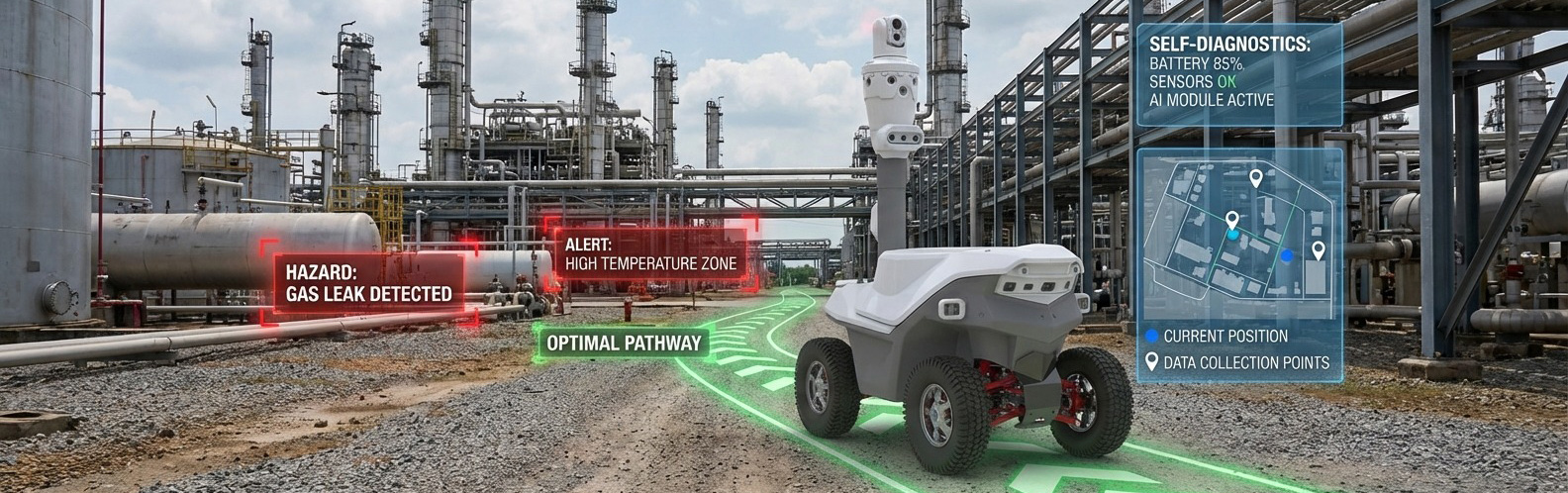
A mobile robot is the most practical and economically justified platform for real-world AI and real-world business applications – not for speculative startups or endless streams of unused innovations, but for tangible, high-value use cases. Mobile robots improve productivity, reduce operational losses, and enable true robotization of labor and processes.
They serve as the optimal foundation for four major AI directions, each of which branches into its own dedicated page:
- Total awareness for industrial enterprises → continuous understanding of everything happening on the territory.
- Collecting real-world data for training large-scale AI models → dynamic, multimodal datasets instead of synthetic or curated footage.
- Practical monetization of existing AI/ML models → turning neural networks into revenue-generating deployed products.
- A mobile infrastructure layer for porting security, inspection, and industrial analytics software → a ready outdoor AI platform based on NVIDIA Orin.
Below we compare the SMP Robotics mobile robot with two other categories – robot dogs and humanoid robots – to show why the mobile platform is the strongest choice for real-world AI deployment on large outdoor territories.
Mobile Robots vs Robot Dogs: Endurance, Stability, and Data for AI
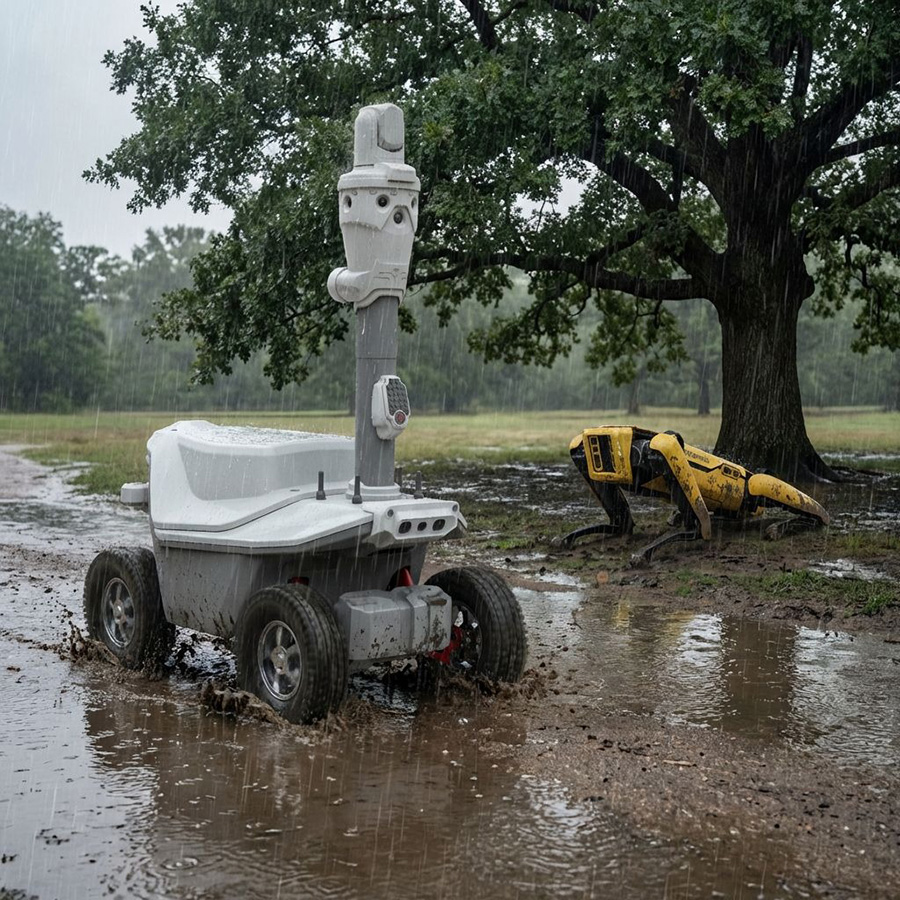
Robot dogs have become popular because of impressive demonstrations: climbing stairs, acrobatics, balancing on uneven surfaces. But in the real industrial and outdoor AI scenarios described above, these abilities provide little practical value.
In real operations, robot dogs face critical limitations: short autonomy (usually 1–2 hours), minimal payload capacity, and limited outdoor resilience to rain, dust, temperature shifts, and wind. This makes robot dogs a poor match for 24/7 outdoor AI deployment, where continuous perception and stable uptime are essential.
A mobile robot, however, is built as a long-duration carrier of sensors and compute. It can run an entire shift, move across large territories, remain stable on industrial surfaces, and produce a continuous stream of structured real-world data about people, vehicles, equipment, and events.
For AI applications running on NVIDIA Orin, a mobile robot is not just a vehicle – it becomes the real-world data layer enterprise AI systems are missing. Instead of fragmented video clips, the mobile robot delivers persistent operational visibility that allows AI models to generalize and function reliably in production environments. Where a robot dog remains a demonstration, the mobile robot becomes a true AI infrastructure node in the field.
Mobile Robots vs Humanoids: Cost, Reliability, and Outdoor Readiness
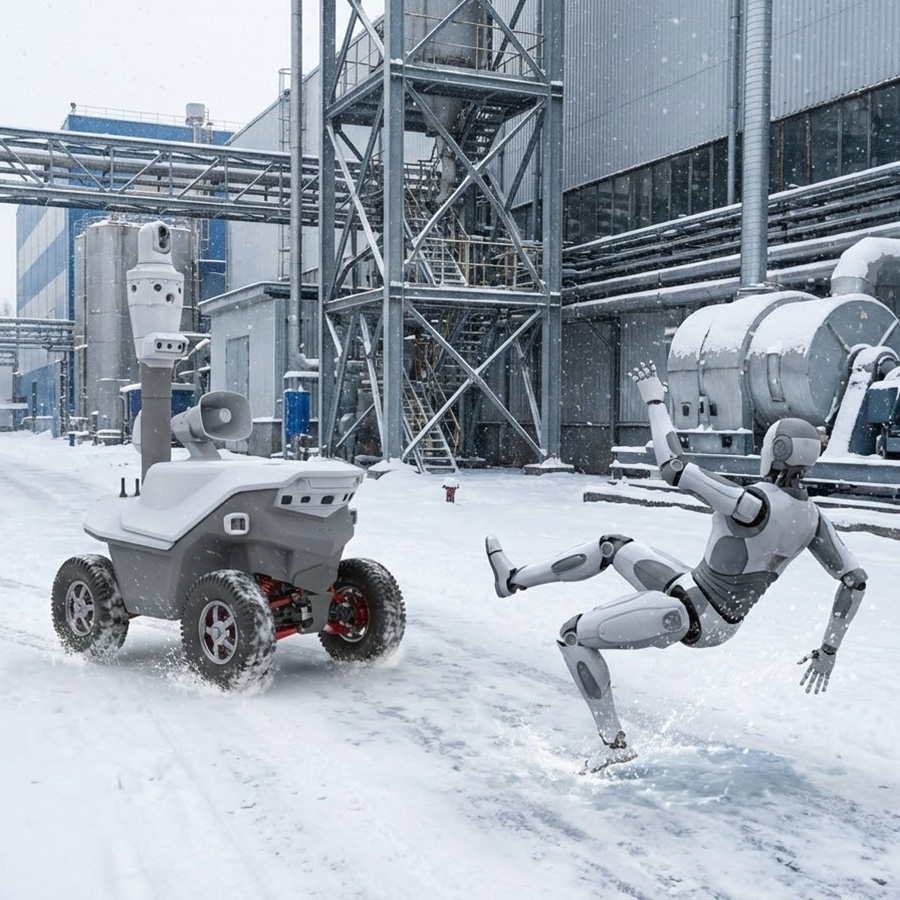
Humanoid robots are a promising long-term direction, but today they remain largely experimental. Their cost is several times higher than that of wheeled mobile robots. Their outdoor stability is limited, maintenance is complex, and most computational resources are consumed by balancing and locomotion rather than by running AI workloads.
This makes humanoids unsuitable for large outdoor territories, where long runtime, environmental robustness, and predictable operation are essential. Despite rapid progress, humanoid platforms will remain expensive and fragile for years to come.
Energy capacity is another fundamental limitation: a walking robot cannot physically carry battery mass comparable to a wheeled platform, which severely limits runtime and the power available for payloads and AI compute.
In practice, humanoids are more suited for controlled indoor spaces – factory floors, R&D labs, or high-end consumer environments – not for logistics yards, industrial perimeters, or open-air infrastructure.
A mobile robot solves the same AI tasks more reliably, more affordably, and far more practically. It does not depend on complex motor coordination and does not require continuous attention from robotics specialists. With its industrial design and powerful NVIDIA Orin edge AI compute, a mobile robot can run multiple analytics modules in parallel, operate for many hours, and deliver a stable high-value data stream for AI training and inference.
While humanoids represent the future, mobile robots deliver real-world AI today – scalable, cost-efficient, and immediately deployable.
Why Mobile Robots Are the Ideal Infrastructure for Applied AI and Edge-AI Deployment
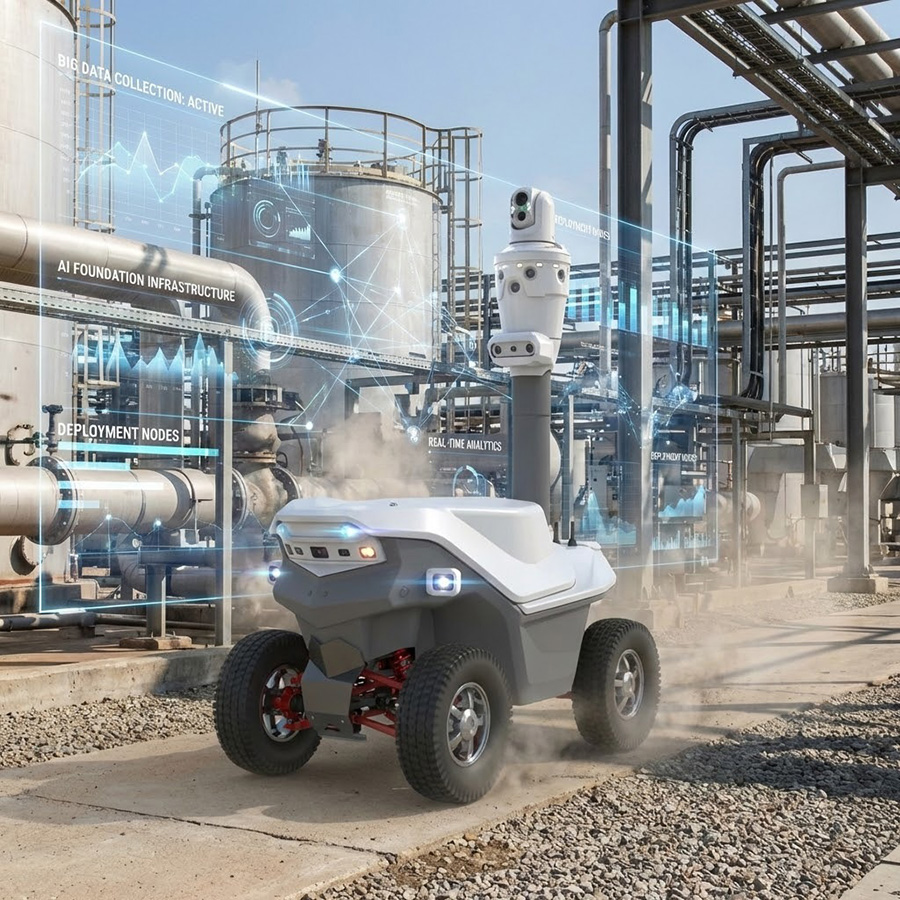
If the goal is not a one-time demo but practical integration of AI into daily enterprise operations, the mobile robot becomes the best possible platform. It provides uninterrupted real-world data collection, operates where fixed sensors cannot be installed, and forms a dynamic, constantly refreshed live model of the territory.
This ability to generate a “living” data layer enables enterprise AI to:
- detect operational losses,
- reduce costs,
- optimize equipment utilization,
- increase workforce productivity.
With NVIDIA Orin as its onboard compute module, the mobile robot functions as a full edge-AI node, capable of running multiple third-party AI applications simultaneously – security analytics, industrial inspections, behavioral modeling, risk detection, and more.
For industry, logistics, distribution centers, energy companies, and urban services, the mobile robot is a mature technological platform on which real AI is built: robust, scalable, and economically justified
Remote Operations and Continuous Awareness for Large Industrial Facilities
In addition to data collection and AI analytics, mobile inspection robots enable full remote operational oversight. Managers and engineers gain real-time access to sensor data, events, alerts, and movement maps – from any location and device.
This delivers continuous operational awareness across large outdoor territories, allowing teams to respond to issues as quickly as if they were physically present. The result is faster decision-making, improved safety, higher operational stability, and more predictable performance.
A mobile robot effectively becomes a tool of remote presence for industrial sites. And critically, these capabilities are validated through years of real-world deployment at manufacturing, logistics, and energy facilities – proving their reliability in daily operations.
Discover the new mobile robot model equipped with a next-generation NVIDIA Orin compute module