Real-World AI Monetization Through Autonomous Mobile Robots

AI companies rarely struggle because their models lack intelligence. They struggle because their systems never reach the physical environments where enterprise value is created. Synthetic datasets and controlled demos cannot reproduce the complexity, motion, and unpredictability of real operations. Without continuous real-world perception, AI cannot generalize, cannot deliver ROI, and cannot become a sellable product.
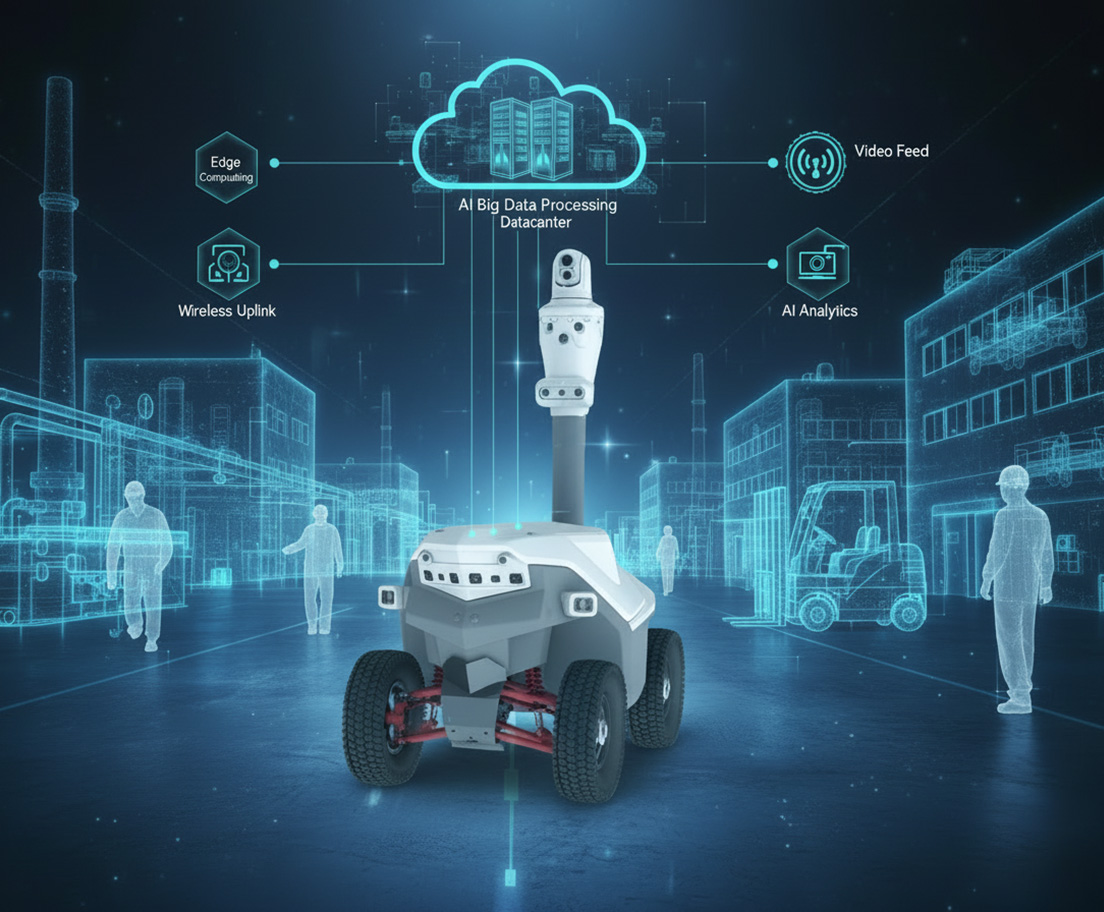
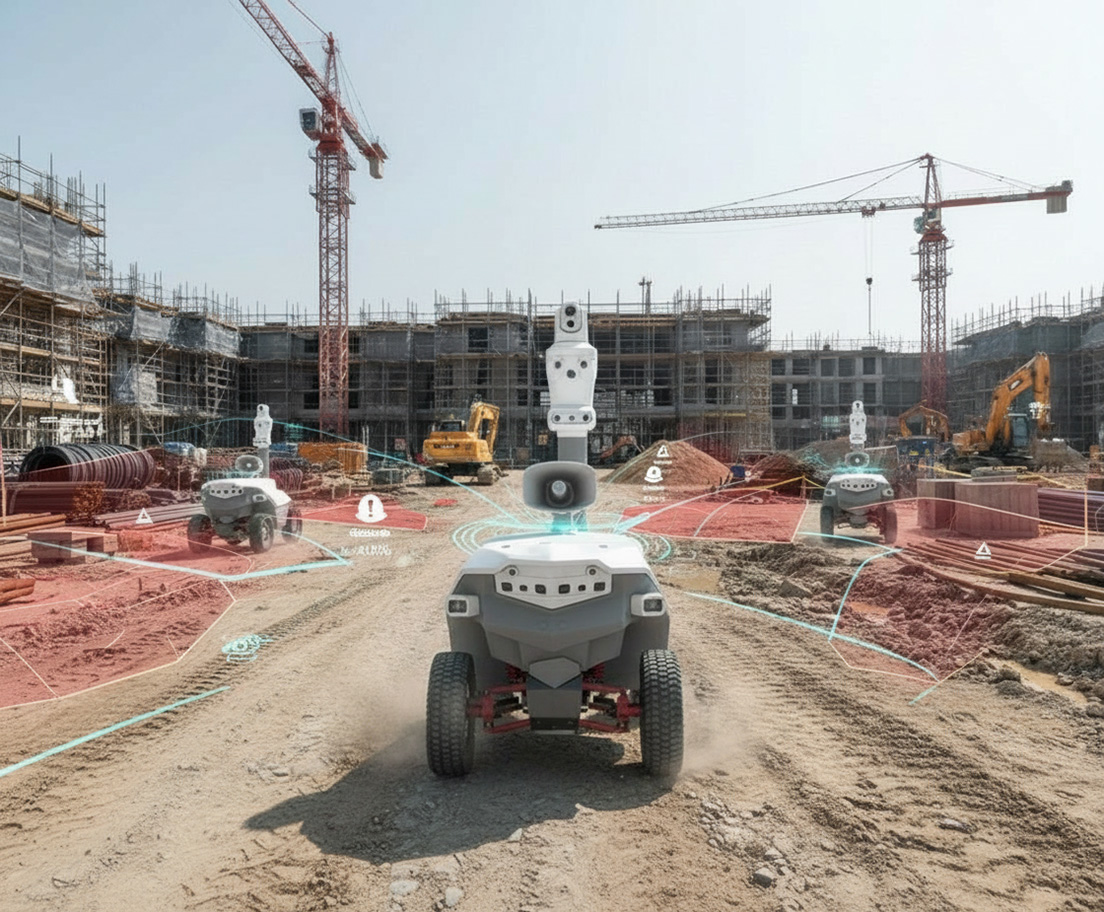
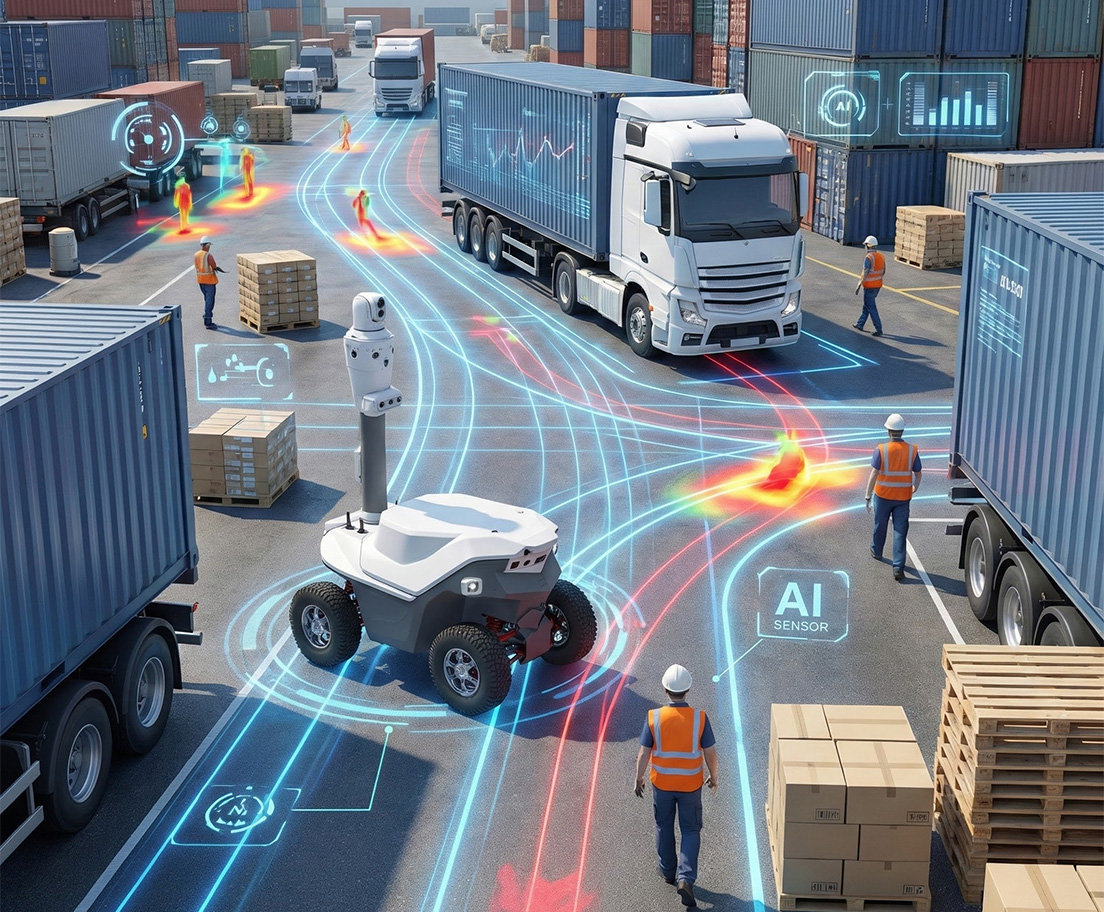
Autonomous mobile robots fix this by providing the real-world data layer modern AI systems require. They move through industrial sites, logistics yards, construction zones, and open territories, delivering continuous video and environmental signals. Once your AI connects to live physical operations through mobile robots, it gains perception, grounding, and relevance – and immediately becomes monetizable.
Connect your AI to real operations, and it becomes a business. Mobile robots provide the perception layer to monetize and scale.
Why AI Models Fail Without a Mobile-Robot Perception Layer
AI breaks in enterprise environments because it lacks a sensory connection to the physical world. Models trained on synthetic or static datasets fail to understand the real operational conditions they’re meant to automate. Logistics hubs, industrial perimeters, manufacturing zones, or construction sites operate in constant motion, and AI that does not perceive this movement cannot produce meaningful insights or stable results.
Even highly capable models collapse during POCs because companies lack the hardware layer that provides continuous real-world data. Without the mobile-robot perception layer – the combination of mobility, sensing, and persistent visibility – AI remains a demonstration instead of a deployable, revenue-driving product.
How Autonomous Mobile Robots Connect AI to Real Operations
Mobile robots function as the physical interface of your AI architecture. They supply the continuous, high-fidelity video and environmental context that models need to detect events, understand patterns, and generate actionable insights. Robots handle mobility, uptime, coverage, and terrain access; your AI handles inference, analytics, and automation.
This partnership transforms AI into a product. Once your model receives live, real-world data from mobile robots, it becomes operationally relevant, delivers measurable value, and converts directly into monetizable deployments. AI stops being research – it becomes revenue.
How AI Becomes a Scalable Business When Powered by Mobile-Robot Data
Real-world data enables AI to improve rapidly. Accuracy increases, edge cases reduce, and generalization strengthens. Product teams gain a solution customers can deploy immediately. Engineering teams receive continuous data to refine and retrain models. Investors see AI that operates in the field instead of controlled environments.
Market leadership will belong to the AI companies that connect their systems to real operations earlier than competitors. Models trained on mobile-robot data outperform synthetic AI every time. We do not compete with AI developers – we supply the real-world perception infrastructure that makes their intelligence profitable. AI without real-world data is a demo. AI connected to mobile robots becomes a business.
How AI Becomes a Scalable Business When Powered by Mobile-Robot Data
Real-world data enables AI to improve rapidly. Accuracy increases, edge cases reduce, and generalization strengthens. Product teams gain a solution customers can deploy immediately. Engineering teams receive continuous data to refine and retrain models. Investors see AI that operates in the field instead of controlled environments.
Market leadership will belong to the AI companies that connect their systems to real operations earlier than competitors. Models trained on mobile-robot data outperform synthetic AI every time. We do not compete with AI developers – we supply the real-world perception infrastructure that makes their intelligence profitable. AI without real-world data is a demo. AI connected to mobile robots becomes a business.
Discover the new mobile robot model equipped with a next-generation NVIDIA Orin compute module